

The chore chart app kids keep up with.
A printable chore chart can't reset itself, track who did what or pay out a reward. Plannie's chore chart app does all of that. Each child gets an age-appropriate list, tickets add up automatically, and the household redeems them for real rewards.
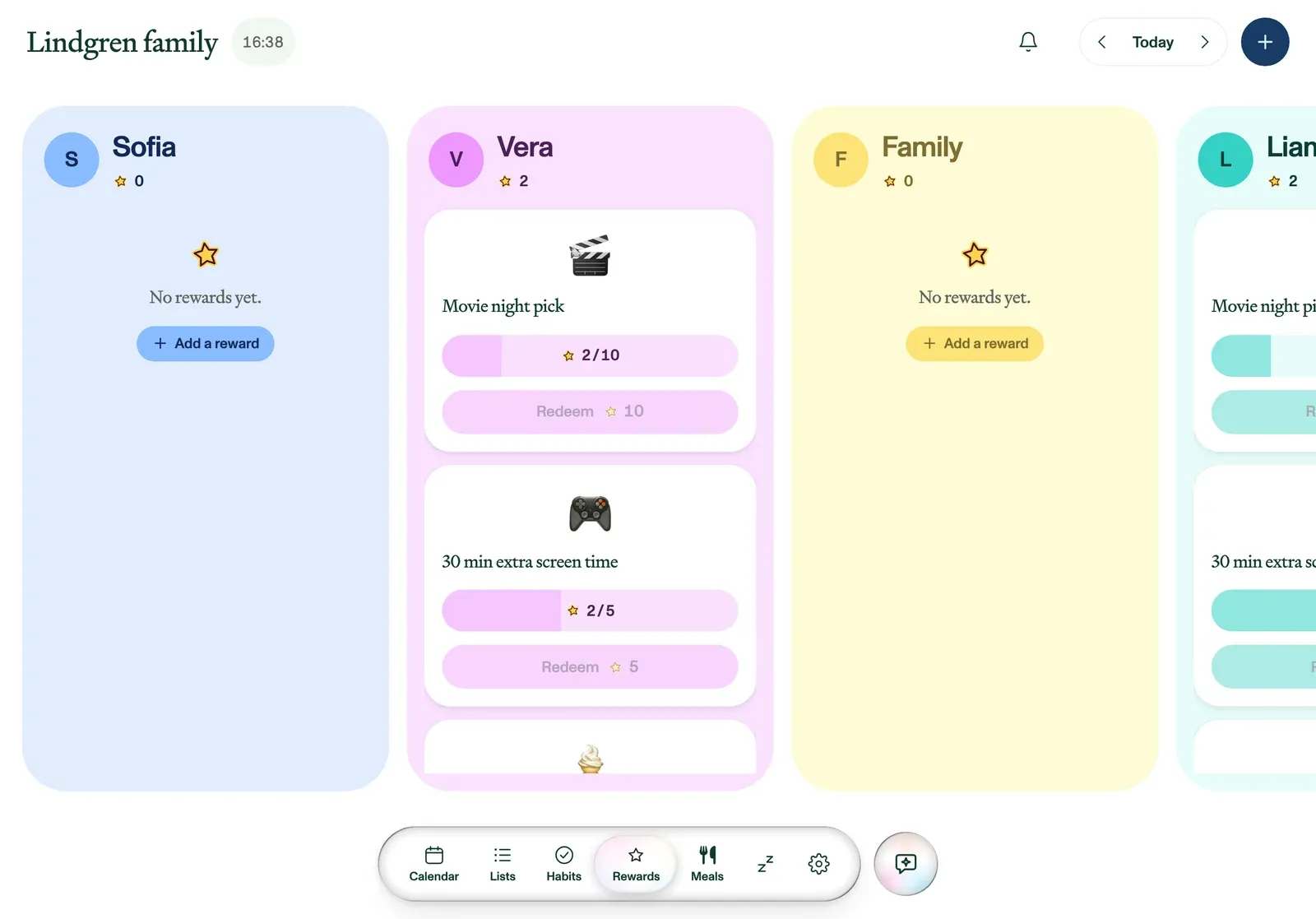
How the flow works
Each family member gets a column of tasks, grouped by time of day (morning routine, after school, evening), so expectations are never a guessing game. Ticking off a task can earn tickets, which trade for rewards the household has agreed on. Streaks make consistency visible without a parent tracking it by hand.
- Tasks grouped by morning, after-school and evening
- Tickets earned per task, redeemable for household-set rewards
- Streaks tracked automatically per child
AGE-APPROPRIATE EXAMPLES
- Ages 3-5: put toys in the bin, carry a plate to the sink
- Ages 6-9: make the bed, feed a pet, set the table
- Ages 10-13: unload the dishwasher, take out the bins
- Teens: cook a meal, manage their own room, help a younger sibling's routine
Parents set the board, kids run their day
Adding, editing or removing tasks and rewards sits behind the household PIN, set under Settings → Parental lock. Kids see and complete their own list and watch their ticket balance grow. They can't rewrite what's expected of them or what it's worth.
Frequently asked
Is Plannie suitable for chores, routines and rewards for children?+
Yes. Plannie's habits and rewards board gives each child their own list of age-appropriate tasks, grouped by time of day, and a ticket system they earn toward rewards the family sets together. Parents keep control of what's on the list and what it trades for.
What age can a child start using it?+
Most families start around age 3-4 with one-step tasks and add more as kids can handle them. See the guide on dividing chores fairly by age for a rough breakdown by age band.
Can kids see and change other siblings’ chores?+
Each child sees their own list. Editing tasks, rewards and other settings is behind the household PIN, so kids can complete and tick off their own tasks without being able to rewrite the board.
Do rewards have to cost money?+
No. A household sets its own reward list, and tickets can trade for anything agreed on: screen time, a choice of Friday dinner, a later bedtime, or an actual allowance if that's what a family prefers.